
Health Node - Your Health, Nutrition, and Weight Loss Portal

The Best Health, Nutrition, Weight Loss and Medical Products Info and Reviews

  • Home
  • Subscribe

Healthy Ways Around White Sugar

By Nutrition Facts on May 31, 2008

sugar Healthy Ways Around White Sugar

Our kids are eating more sugar and getting fatter; with the average yearly consumption per person being approximately 135 pounds! As well, research indicates an over-consumption of white, refined sugar weakens the immune system, can trigger violent behavior and other behavioral problems in children, causes dental decay and robs precious vitamins and minerals from a child’s body.

Don’t despair. You can still satisfy the youngster’s sweet tooth with natural sweeteners that are more nutritionally sound with the following:

Organic maple syrup: Substitute 2/3 to 1/4 cup maple syrup for 1 cup white sugar. Maple syrup is a good source of potassium and calcium.

Maple sugar: Maple sugar can be used in a variety of baked goods. Substitute 1 cup of maple sugar for 1 cup of white sugar.

Sucanat: Sucanat contains more vitamins, minerals and other trace nutrients than white sugar. It is an all-purpose sweetener for baking, cooking and hot drinks and should be used in a 1 to 1 replacement for white sugar.

Barley malt syrup: Barley malt syrup is half as sweet as white sugar and is best used in combination with other sweeteners. Barley malt syrup contains a variety of trace minerals and vitamins. 1½ cup of barley malt is equal to ½ cup of white sugar.

Date sugar: It is high in fiber and contains folic acid. It can be used to make toppings for pies and fruit crisps or for baking breads, cakes and muffins. Date sugar can be used in a 1 to 1 replacement for white sugar.

Recommend Us:
  • BlinkList
  • del.icio.us
  • Reddit
  • Digg
  • email
  • Facebook
  • Google Bookmarks
  • StumbleUpon
  • Twitter
  • Faves
  • Mixx
  • MySpace

Posted in Health Articles, Nutrition Facts | Tagged Barley malt syrup, behavioral problems, Date sugar, Maple sugar, Organic maple syrup, Sucanat | Leave a response

Are Business Travels Nutrient Deficient

By Nutrition Facts on May 31, 2008

foodontheplanecn 0556 Are Business Travels Nutrient Deficient

People of all ages live such hectic lifestyles, that eating nutritious meals is seen as something of a luxury to. However, this healthy eating dilemma is greater for the typical business traveler.

The second biggest source of unhealthy food for a typical business traveler is at the airport. They offer travelers a selection of fast foods or snack foods that are usually very high in carbohydrates, unsaturated fats, and high in calories.

So if the airport is the second largest source of unhealthy food, then what is the first? Without doubt, it is on the airplane itself.

Indeed, according to a recent study, the average meal served by airlines in all service classes tops 1000 calories. But this problem goes beyond calories. Almost 45% of the 1000+ calories in an airline meal come from fat.

Some awareness is happening in the world of business traveler nutrition; however this awareness is not happening fast enough. Business travelers need more nutritious food.

A few nutritionally sound products are generating positive feedback from business travelers. Taken as either a supplement or a meal on its own, these nutritional products, which offer a complete range of essential vitamins, can help business travelers stay healthy in ways that fit into their busy, time-conscious lives.

You can find these products on the internet, but be sure to check for airline restrictions.

Recommend Us:
  • BlinkList
  • del.icio.us
  • Reddit
  • Digg
  • email
  • Facebook
  • Google Bookmarks
  • StumbleUpon
  • Twitter
  • Faves
  • Mixx
  • MySpace

Posted in Health Articles, Nutrition Facts | Tagged business traveler, Carbohydrates, high in calories, unhealthy food, unsaturated fats | Leave a response

Is Protein Important For Diabetics

By Nutrition Facts on May 31, 2008

beef1 Is Protein Important For Diabetics

Proteins are the natural choice when a patient is faced with diabetes. If diabetes is uncontrolled, muscle protein is broken down into amino acids and converted into glucose by the liver. Proteins have to supply enough energy to substitute for carbohydrates and proteins are broken down faster than they are made. If this happens the body ends up with a protein deficit which affects normal body functions.

A protein deficit has been shown to impair resistance to infections in diabetics.

Nutrition therapy for diabetes has progressed from prevention of obesity or weight gain to improving the effectiveness of insulin. With this new approach, a high protein diet (30% of total food energy) is a very pertinent part of nutrition therapy.

It is speculated that a high protein diet has a favorable effect in diabetes due to the ability of proteins and amino acids to stimulate insulin release from the pancreas.

As well, dietary supplements containing proteins like whey and casein come highly recommended. A protein supplement containing casein can increase the amount of energy manufactured from every meal and, at the same time, reduce the need for pharmacological insulin.

Ask your health care professional about your dietary protein needs if you have diabetes.

Recommend Us:
  • BlinkList
  • del.icio.us
  • Reddit
  • Digg
  • email
  • Facebook
  • Google Bookmarks
  • StumbleUpon
  • Twitter
  • Faves
  • Mixx
  • MySpace

Posted in Health Articles, Nutrition Facts | Tagged diabetes, diabetics, protein deficit, proteins | Leave a response

A Guide To Blood Pressure

By Heart Disease on May 31, 2008

bpress A Guide To Blood Pressure

Blood pressure is defined as the force that is pushed along the arteries every time the heart beats. Therefore, blood pressure is a measure of how hard the heart has to work to pump blood.

The pumping action is known as systolic pressure. When the heart is at rest, between beats and the blood pressure falls, is known as diastolic pressure. Blood pressure is measured using a blood pressure cuff and recorded as systolic pressure over diastolic pressure. The top number indicates the systolic pressure and the bottom indicates the diastolic pressure. Normal blood pressure is lower than 120/80. Blood pressure in children is much lower than in the adults since pressure rises as a person ages.

The systolic and diastolic reading of 140/90 or higher indicates high blood pressure. This can result in a faster heartbeat as the heart tries to pump the blood. This could lead to stroke, heart attack, and kidney problems.

Severe medical problems can cause blood pressure to rise. Arteries may become hardened and narrowed with cholesterol plaque and calcium, resulting in the heart having to pump harder.

Blood pressure is important to pay attention to as high blood pressure is linked to hypertension, which leads to heart attack.

Ask your doctor about your blood pressure.

Recommend Us:
  • BlinkList
  • del.icio.us
  • Reddit
  • Digg
  • email
  • Facebook
  • Google Bookmarks
  • StumbleUpon
  • Twitter
  • Faves
  • Mixx
  • MySpace

Posted in Health Articles, Heart Disease | Tagged blood pressure, diastolic pressure, heart attack, hypertension, systolic pressure | Leave a response

What Is A Implantable Cardioverter Defibrillator

By Heart Disease on May 31, 2008

 icd 1 What Is A Implantable Cardioverter Defibrillator

An implantable cardioverter defibrillator is a device designed for individuals with certain forms of heart disease or defects that put them at recurring risk of sustained ventricular fibrillation, or cardiac arrest. They are a sort of pacemaker. The device is implanted either within the chest itself, or more recently, within the blood vessels which eliminates the need for open chest surgery.

An implantable defibrillator, or ICD, uses leads positioned near the heart to deliver electronic pulses when it is detected that a cardiac rhythm is out of sync. The device can also, if necessary, stimulate a consistent pace or beat if the heart is unable to do so on its own.

Internal defibrillators are only used in cases where a patient has shown consistent, recurring risk of cardiac arrest or attack do to fibrillation. As with any invasive surgery, an ICD is not to be taken lightly, but they have been extraordinarily useful in preventing sudden deaths among patients who elect to have them implanted.

If you are wondering if you are a candidate for an ICD, check with your regular doctor or cardiologist. Only they can determine whether you are in need of an internal defibrillator. However, if you have been found to be at recurring risk for rhythm interruptions, an ICD may be a treatment option for you.

Consult your doctor for more information about whether an ICD is right for you.

Recommend Us:
  • BlinkList
  • del.icio.us
  • Reddit
  • Digg
  • email
  • Facebook
  • Google Bookmarks
  • StumbleUpon
  • Twitter
  • Faves
  • Mixx
  • MySpace

Posted in Health Articles, Heart Disease | Tagged ICD, implantable cardioverter defibrillator, internal defibrillator, pacemaker | 1 Response

Red Yeast Rice To Battle Heart Disease

By Heart Disease on May 31, 2008

redyeastrice Red Yeast Rice To Battle Heart Disease

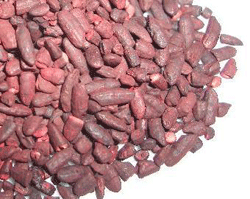
Red yeast rice is a natural product native to China that’s been used in Asian traditional medical since approximately 800 AD. Red yeast rice extract is carefully produced to avoid the presence of citrinin, a sometimes toxic by-product of the fermentation process. This product is further enhanced with the addition of CoQ10 to support healthy cardiovascular and immune system function, Milk Thistle Extract to support healthy liver function, and Alpha Lipoic Acid to provide antioxidant support.
Red yeast rice also contains several compounds collectively known as Monacolins, substances known to inhibit cholesterol formation.

Red yeast rice extract has a number of heart-healthy benefits: It seems to help reduce total cholesterol levels, lower levels of LDL termed as “bad” cholesterol, increase levels of HDL termed as “good” cholesterol, and lower levels of unhealthy fats called triglycerides. It seems to accomplish this by restricting the liver’s production of cholesterol.

Red yeast rice extract helps to prevent heart disease and some of its complications.
Red yeast rice helps in lowering cholesterol and triglycerides and has been used as a traditional medicine to promote circulation and heart health, but also used as a food flavoring agent.
Red yeast rice helps to prevent atherosclerosis – a condition that can lead to the “silent killer”-coronary heart disease
Red Yeast Rice helps to improve circulation by its cholesterol regulating action.

Ask your doctor before adding red yeast rice to your diet.

Recommend Us:
  • BlinkList
  • del.icio.us
  • Reddit
  • Digg
  • email
  • Facebook
  • Google Bookmarks
  • StumbleUpon
  • Twitter
  • Faves
  • Mixx
  • MySpace

Posted in Health Articles, Heart Disease | Tagged HDL, Red yeast rice, Red yeast rice extract, Triglycerides | Leave a response

All The Info On The New Cholesterol Findings

By Heart Disease on May 31, 2008

img0128 All The Info On The New Cholesterol Findings

Until recently, doctors have focused on the ratio of our good cholesterol (HDL) to our total cholesterol but today it is felt that a closer look at bad cholesterol (LDL) is our best management tool.

Total Cholesterol contains good cholesterol that protects our heart, known as High Density Lipoprotein (HDL) and bad cholesterol that is harmful to the heart, known as Low-Density Lipoprotein (LDL).

Cholesterol, although a fat, is an essential nutrient for the body. It is made in the liver. The liver produces cholesterol in the necessary quantities for health. When the liver cannot efficiently dispose of the cholesterol excesses of a high fat diet, the excess cholesterol becomes bad cholesterol (LDL) and travels to the arteries of the heart and forms plaque. As the plaque accumulates, the walls of the arteries narrow and blood flow to the heart is restricted and is eventually blocked.

The theory that “a higher ratio of something good to something bad is always better” is especially true for a healthy heart. This new standard compares our bad cholesterol (LDL) to our good cholesterol (HDL), rather than our good cholesterol to our total cholesterol.

If you do not know your cholesterol numbers: total cholesterol, HDL and LDL, make an appointment with your physician and request his recommendations for cholesterol management.

Recommend Us:
  • BlinkList
  • del.icio.us
  • Reddit
  • Digg
  • email
  • Facebook
  • Google Bookmarks
  • StumbleUpon
  • Twitter
  • Faves
  • Mixx
  • MySpace

Posted in Health Articles, Heart Disease | Tagged bad cholesterol, good cholesterol, HDL, LDL | Leave a response

Is Public Access Defibrillation A Good Idea

By Heart Disease on May 31, 2008

 public access defibrillation Is Public Access Defibrillation A Good Idea

There are successful PAD, public access defibrillator, campaigns that are currently running in the US. Good examples of offering public access to defibrillators can be found in Indianapolis International Airport, Orlando International Airport, Colorado Springs Airport, Nashville International Airport, St. Louis International Airport/Lambert Field, Tampa International Airport and Tucson International Airport.

Only 10 months after the se programs were initiated, the survival rate of patients has risen to 75%. Even though the automated external defibrillators are very easy to use, it is necessary that people benefit of some basic AED training in order to avoid negligent use of this device and make the AEDs fully effective. The basic training must consist of at least 3 or 4 hours of training.

After having completed the AED course, one must be able to determine the state of a patient and whether the use of an AED is needed. The AED trainee should to be able to assess the state of the patient after the shock delivery. The trainees also have to know what precautions are needed in order to perform a safe defibrillation.

Presently, there are several automated external defibrillator training courses provided by the American Heart Association (AHA) or the Red Cross on request.

Recommend Us:
  • BlinkList
  • del.icio.us
  • Reddit
  • Digg
  • email
  • Facebook
  • Google Bookmarks
  • StumbleUpon
  • Twitter
  • Faves
  • Mixx
  • MySpace

Posted in Health Articles, Heart Disease | Tagged AED course, external defibrillators, heart attack, PAD, public access defibrillator | Leave a response

An Example Atkins Diet Menu

By Weight Loss on May 31, 2008

eggb An Example Atkins Diet Menu

The Atkins Diet Plan is based on low carb Atkins diet principles that help people re-energize their life by re-balancing their nutrition, losing weight and keeping it off.

The Atkins Diet Plan activates body metabolism, so that you burn fat for energy and reduce the risk factors associated with certain major health problems, including chronic fatigue, diabetes and high blood pressure.

The following is a two day example of the Atkins diet menu:

Atkins Diet Menu – Day 1
Breakfast
3 Eggs, Scrambled with cream
4-6 Strips Bacon
Coffee or tea with Splenda and cream

Lunch
Chicken Salad
(6 oz. Grilled Chicken
1T Romano Cheese
2c dark salad greens
2T Ranch Dressing
1 chopped hard boiled egg)

Dinner
Fish Fry (fish fillets dipped in egg and coated in whey protein and fried in vegetable oil)
1 cup salad greens
¼ medium tomato
1 thin slice red onion
1 cup Broccoli rabe with butter

Atkins Diet Menu – Day 2
Breakfast
Double serving of Atkins Hot Cereal
1T cream
4 Sausage Patties
Decaf Cinnamon coffee (add ¼ t cinnamon and 1tsp vanilla extract to coffee pot) with Splenda and cream

Lunch
Luncheon pinwheels
(Wrap slices of turkey, ham, chicken, salami, pastrami, or beef etc. around sticks of hard or cream cheese and cut into bite-size pieces)
2 Cups salad greens
2T Ranch dressing

Dinner
Steak (grilled with garlic butter, 2 thin slices of onion, and ½ cup mushrooms)
1 cup salad greens with:
Bacon bits
1T Romano cheese
1T Dressing of Choice
1 cup Asparagus

Ask your doctor before beginning any diet.

Recommend Us:
  • BlinkList
  • del.icio.us
  • Reddit
  • Digg
  • email
  • Facebook
  • Google Bookmarks
  • StumbleUpon
  • Twitter
  • Faves
  • Mixx
  • MySpace

Posted in Health Articles, Weight Loss | Tagged atkins diet, atkins diet free, atkins diet menu, atkins diet plan | Leave a response

Find The Scarsdale Diet Menu Here

By Weight Loss on May 31, 2008

 newshrimp Find The Scarsdale Diet Menu Here

The Scarsdale diet menu does not indicate any portion. You can eat as much as you like until you are satisfied, not stuffed.

Breakfast in Scarsdale diet menu is the same everyday:

The Scarsdale diet menu indicates that 1/2 grapefruit is the best fruit for breakfast, however it can be substituted for other fruits in season.

One slice of protein bread, toasted, no spread added.

Coffee or tea (no sugar, cream or milk, no honey).

Monday

Lunch:
Assorted cold cuts
Tomatoes – sliced, broiled, or stewed
Coffee/Tea/Diet Soda/Water

Dinner:
Fish or shellfish, any kind Combination salad, any greens and vegetables as you wish
One slice protein bread toasted
Grapefruit – if not available, use fruits in season
Coffee/Tea/Diet Soda/Water

Tuesday

Lunch:
Plenty of broiled, lean hamburger
Tomatoes, lettuce, celery, olives (limit 4), cucumbers and/or Brussels Sprouts
Coffee/Tea/Diet Soda/Water

Dinner:
Fruit salad, any combination of fruits
Coffee/Tea/Diet Soda/Water

Wednesday

Lunch:
Tuna fish or salmon salad (oil drained off) with lemon and vinegar dressing
Grapefruit, or melon, or fruit in season
Coffee/Tea/Diet Soda/Water

Dinner:
Sliced roast lamb*, all visible fat removed
Salad of lettuce, tomatoes, cucumbers, celery
Coffee/Tea/Diet Soda/Water

* Can be substituted with fish, seafood, chicken or turkey

Thursday

Lunch:
Two eggs, any style (no fat used in cooking)
Low-fat cottage cheese
Zucchini, or string beans, or sliced/stewed tomatoes
One slice of protein bread, toasted
Coffee/Tea/Diet Soda/Water

Dinner:
Roast, broiled or barbequed chicken (skin and visible fat removed before eating)
Plenty of spinach, green peppers, string beans
Coffee/Tea/Diet Soda/Water

Friday

Lunch:
Assorted cheese slices (preferably low fat)
Spinach, all you want
One slice of protein bread, toasted
Coffee/Tea/Diet Soda/Water

Dinner:
Fish or shellfish
Combination salad (any fresh vegetables desired, raw or cooked)
One slice of protein bread, toasted
Coffee/Tea/Diet Soda/Water

Saturday

Lunch:
Fruit salad, any combination of fruits
Coffee/Tea/Diet Soda/Water

Dinner:
Roast turkey or chicken
Salad of tomatoes and lettuce
Grapefruit or fruit in season
Coffee/Tea/Diet Soda/Water

Sunday

Lunch:
Cold or hot turkey or chicken
Tomatoes, carrots, cooked cabbage, broccoli or cauliflower
Grapefruit or fruit in season
Coffee/Tea/Diet Soda/Water

Recommend Us:
  • BlinkList
  • del.icio.us
  • Reddit
  • Digg
  • email
  • Facebook
  • Google Bookmarks
  • StumbleUpon
  • Twitter
  • Faves
  • Mixx
  • MySpace

Posted in Health Articles, Weight Loss | Tagged scarsdale diet, scarsdale diet menu, ways to lose weight, Weight Loss | Leave a response

« PreviousNext »
Health Articles
Nutrition Facts
Weight Loss
Health Food
Home Medical Equipment
Heart Disease
Health News

Ads

Advanced Health LTD

Blog Catalog

Find Blogs in the Blog
Directory

Health Links

  • Acai Diet
  • Maqui Berry Detox
  • Metabolic Syndrome News
  • Weight Loss Patch Reviews

Copyright © 2010 Health Node - Your Health, Nutrition, and Weight Loss Portal.

Powered by WordPress, Hybrid, and Leviathan.