
Maps
Map 2010

2 girls 1 cup
two girls one cup
farmville
two girls one cup 2 girls 1 cup 2 girls 1 cup
May 29, 2008

Does Coffee Affect Diabetics


cof.jpg

A recent study from Duke University shows that caffeine increases blood sugar levels in diabetics who regularly drink coffee.

These findings are surprising because coffee contains no calories and has a glycemic index of 0. However, caffeine is a stimulant similar to the fight-or-flight response. The fight-or flight response causes a rise in blood sugar.

The problem is that diabetics are not being told to avoid caffeine as part of their blood-sugar control.

If you’re diabetic and consume a lot of caffeine, you may want to consider this new research, especially if your blood sugar levels are not well-controlled.

Here are some tips for caffeine control:

1. Don’t go cold-turkey.

2. Limit consumption of decaf. Even decaf has a small amount of caffeine.

3. Herbal tea or green tea makes a good antioxidant rich substitute when you’re craving a hot beverage.

4. Replace your coffee break with an oxygen break. Do one to two minutes of deep breathing.

5. Move around. You can instantly increase your alertness by getting up, stretching or walking briskly–even for one or two minutes.

Make sure to talk to your doctor about caffeine consumption if you are diabetic.


Tagged with:

April 23, 2008

Are You Really Getting All Of Your Nutrients


nutr.JPG

Once your body has digested and absorbed the food you are eating, are you really getting all the benefit from the nutrients?

Before the nutrients that are contained in the foods you eat have actually entered the blood stream, the nutrients are not actually considered to have entered your body. So you can actually eat a whole lot of good food without correctly absorbing its nutrients.
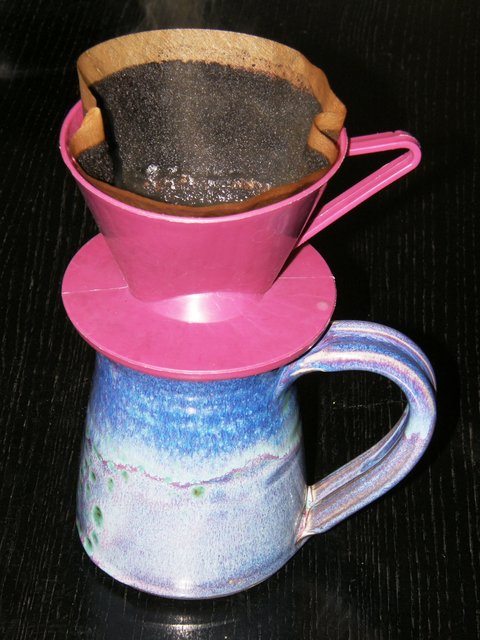
You can ensure that you absorb the maximum amount of nutrients from your diet with a number of techniques. Two of the major factors in the way to actually get the nutrients you eat would be to limit caffeine and alcohol intake. Alcohol can reduce the secretion of digestive enzymes that help to break down food and caffeine can reduce your body’s absorption of iron.

Stress can also play a role in not allowing your body to absorb all the nutrients available in your diet. So if you want your body to absorb the maximum amount of nutrients, keep caffeine and alcohol intake to moderate levels. If you still want to have your morning coffee, make sure that it is consumed at least an hour away from breakfast.


Tagged with:

January 15, 2008

I Don’t Want To Give Up Coffee, and Now I Don’t Have To

images3.jpg

I’m not sure how anyone else feels about it, but my day does not start until that first cup of coffee is in my hand, on its way to my mouth. Seriously, my children have learned that even though Mama loves them more than anything else in the whole world, the first thing I want to hear in the morning is my coffee maker, nothing, nor no one else.

The problem is that I keep hearing about how bad my coffee is for me, that I will be so much healthier if I just give up coffee. I might be healthier, but I’d be insane, so would it really be better for me, or anyone around me? I decided to find out just how harmful my daily pot of coffee really is, and how much of it I could live without, if I really had too. What I found out, was a pleasant surprise. Coffee, if used responsibly, isn’t as bad for you as we’ve been led to believe. What that means, is to drink it in moderation, and be careful how much you add, of whatever it is that you add to your coffee.

Coffee doesn’t provide any vitamins, but it does contain trace amounts of essential minerals, such as Thiamin, Niacin, Folate, Phosphorus, Magnesium, and Manganese. In addition, new research into the health risks of drinking coffee have actually disproved many of the old reasons not to drink it. These studies suggest that drinking coffee may reduce risks of colon and liver cancer; cirrhosis of the liver; may reduce the risk of Parkinson’s disease and the onset of diabetes. Plus, coffee can prevent or reduce the likelihood of developing gallstones, and even prevent cavities. Science has even learned that brewed coffee has been found to have 3 to 4 times the amount of cancer-fighting anti-oxidants as green tea.

The biggest problem that some people have with coffee, is the caffeine, though it is natural caffeine, and so is not as harmful as manufactured stimulants. Caffeine has some health benefits too, but that is an article for another day. And through modern science, you can buy coffee that has no caffeine; personally, I don’t see the point however.


Tagged with: