February 14, 2008

Nutrition Facts to Fight the Effects of Winter Weather

winter-view-photo.jpg


The snow keeps piling up out there, and the cold is sneaking in the windows. It seems as if all I want to do is snuggle under my blankets, read a book, and eat comfort foods. Warm, sweet chocolate cake, mashed potatoes with hot melting butter, I have cravings for foods that my body thinks will make me feel better, even though my mind knows these types of foods aren’t good for me.

I’m pretty sure that I’m not the one with a slight case of the winter blues. During the winter, we are deprived of fresh air and sunshine, and as a result, we suffer from varying degrees of mild seasonal depression.

However, we can fight the depressing effects of the winter weather and our most effective weapon just might be the foods we eat. Maintaining a healthy balance of carbohydrates, proteins, and serotonin is the key to fending off the winter blues.

Fruits, vegetables, proteins from meat, and minimal sugars and salts, these should be the key ingredients in every meal. Plus, eating foods that contain the vitamins that we get from the sun, such as C and D will improve your energy levels and your mood.


Tagged with:

February 5, 2008

THE NUTRITIONAL DANGERS OF MICROWAVE OVENS?


micro1.jpg

While researching the article for this post, I happened across information that declared that microwave ovens are harmful to our health. That opinion caused me some concern because as a working mother, my children eat a great deal of food that is prepared in the microwave. Our microwave cooks breakfast, lunch, and occasionally dinner for my family. I purchase food that is meant to be prepared in the microwave so that my children can eat healthy, nutritious meals that I don’t have to spend hours cooking and cleaning up.

I’m happy to tell you that the Food and Drug Administration has reported complete safety in regards to microwaved food. Allegations that microwaves destroy the nutrients and vitamins in food are false. The belief that microwave ovens cause stomach and intestinal cancers are unfounded and untrue as well. Microwave ovens do not cause radiation exposure to food, they do not change the structure of food, all they do is cook the food more quickly without having to add water in some cases, which might actually enhance the nutritional value of the food.

Everything that you’d like to know about the hazards that your microwave DOES NOT pose to your health is available at http://www.fda.gov/cdrh/consumer/microwave.html


Tagged with:

January 28, 2008

The Raw Facts about Raw Food

salad.jpg

The Raw Facts about Raw Food

What started as a trend in California a few years ago is now a way of life for many people in many areas of the country. They are known as Raw Foodists, but that doesn’t mean that they must only eat raw foods, it just means that they eat some type of raw food every day.

When the public first became aware of the “Raw Food Diet”, it was primarily hyped as another “miracle weight loss diet”. Little attention was given to the facts about the nutritional benefits that raw foods actually provide for health. Although modern science has made it possible to process and preserve food without losing all of the natural nutrients, raw food is still the healthiest. The vitamins, minerals, and natural enzymes found in fresh foods touched by nothing other than nature are believed by Raw Foodists to be the most healthful to our bodies.

If you would like to find out more about the nutrition facts related to the raw food diet, http://www.newstarget.com/019322.html.


Tagged with:

January 25, 2008

Want Your Kids To Be Smarter? Foods That Feed the Brain.

girleatinghealthyfood.jpg

Have you ever watched your child devour an entire bag of Doritos during homework time? Or had to forcibly remove the candy dish from the hands of a child who was cramming for a test? I used to think that my kid was just using food as a distraction from the homework, but I’ve been proven wrong. It turns out that food actually feeds the brain, though candy and Doritos aren’t good choices.

Carbohydrates are what kids need for maintaining focus while studying. The brain requires glucose (blood sugar) to stay in focus and attentive. The brain also uses glucose as fuel (energy). Candy, sweets, and chips provide quick bursts of energy that fade just as quickly. Slowly absorbed carbohydrates from fruits and vegetables and grains offer longer lasting mental energy and clarity. These types of carbohydrate healthy foods also provide a slight boost to the bodies’ serotonin level, which has a calming effect. This is very helpful for kids who tend to feel stressed by homework and teachers, and tests.

http://health.kaboose.com/nutrition/snacks.html has some tasty suggestions for study treats that will feed your kids brain.


Tagged with:

January 22, 2008

The Newest News in Nutrition - Olive Oil


mturgastronomiaaceiteoliva_comp01.jpg

A new study in the nutritional benefits of olive oil, conducted by The Environmental, Biochemical, and Nutritional Analytical-Control Research Group, directed by Professors Alberto Fernández Gutiérrez and Antonio Segura Carretero, was completed recently. This study determined that consumption of olive oil rich in polyphenols (natural antioxidants) enhances the health of people suffering from oxidative stress, and is also highly helpful in the deterrence of cell aging and osteoporosis.

Olive oil is already recognized for numerous other health benefits, which include the following;

• Reduce blood pressure
• Inhibit the growth of some cancers
• Control blood sugar in people with diabetes
• Lessen the severity of asthma and arthritis
• Help your body maintain a lower weight
• Natural anti-inflammatory

If you’d like to learn more about the benefits and nutritional value of olive oil, this site has terrific information. http://www.mediterraneandiet.gr/oliveoilhealth.html


Tagged with:

January 17, 2008

Does How Well You Eat Affect How Well You Sleep?


images-2.jpg
The answer to that question is yes. Nutrition actually plays a very crucial part in our quality and quantity of sleep. There are many foods that improve and induce sleep. If you’re troubled with occasional insomnia, you might consider adding these types of nutrients and healthy foods to your diet, as bedtime snacks, and all the time.

Foods that are high in B vitamins are helpful for fighting sleep problems, such as tuna, bananas, sunflower seed, and wheat germ.

Eating foods that contain magnesium will also aid in falling and staying sleep. Almonds, cashews, wheat bran, and foods using brewer’s yeast are good examples.

Spices such as basil, and dill, and even sage will enhance the quality of your rest, and lessen the amount of time it takes you to fall asleep.

Fruits such as berries and leafy green vegetables will make sleep come easier too.

Milk has always been a popular remedy for trouble sleeping, because it contains tryptophan, which converts into serotonin, a natural hormone that promotes sleep. Other foods that have tryptophan are turkey, tuna, honey, and egg whites.

Maintaining the proper levels of all the essential nutrients will help level out an imbalance that could be contributing to the insomnia. You should consult your doctor if your troubles sleeping continue, or have been ongoing.


Tagged with:

January 15, 2008

I Don’t Want To Give Up Coffee, and Now I Don’t Have To

images3.jpg

I’m not sure how anyone else feels about it, but my day does not start until that first cup of coffee is in my hand, on its way to my mouth. Seriously, my children have learned that even though Mama loves them more than anything else in the whole world, the first thing I want to hear in the morning is my coffee maker, nothing, nor no one else.

The problem is that I keep hearing about how bad my coffee is for me, that I will be so much healthier if I just give up coffee. I might be healthier, but I’d be insane, so would it really be better for me, or anyone around me? I decided to find out just how harmful my daily pot of coffee really is, and how much of it I could live without, if I really had too. What I found out, was a pleasant surprise. Coffee, if used responsibly, isn’t as bad for you as we’ve been led to believe. What that means, is to drink it in moderation, and be careful how much you add, of whatever it is that you add to your coffee.

Coffee doesn’t provide any vitamins, but it does contain trace amounts of essential minerals, such as Thiamin, Niacin, Folate, Phosphorus, Magnesium, and Manganese. In addition, new research into the health risks of drinking coffee have actually disproved many of the old reasons not to drink it. These studies suggest that drinking coffee may reduce risks of colon and liver cancer; cirrhosis of the liver; may reduce the risk of Parkinson’s disease and the onset of diabetes. Plus, coffee can prevent or reduce the likelihood of developing gallstones, and even prevent cavities. Science has even learned that brewed coffee has been found to have 3 to 4 times the amount of cancer-fighting anti-oxidants as green tea.

The biggest problem that some people have with coffee, is the caffeine, though it is natural caffeine, and so is not as harmful as manufactured stimulants. Caffeine has some health benefits too, but that is an article for another day. And through modern science, you can buy coffee that has no caffeine; personally, I don’t see the point however.


Tagged with:

January 13, 2008

Water Is the Most Essential Nutrient


Water constitutes 60% percent of an average adults’ body weight, and every function performed within our bodies, needs water to achieve necessary effectiveness.

When we get thirsty, we reach for something to quench that thirst but we never think about why we’re thirsty or that we need to replenish our bodily fluids. When we need a boost of energy, we reach for one of the energy drinks that are the biggest nutrition craze right now, without even realizing that water is the best energy drink there has ever been.

Health professionals have been telling us for years that we need to consume at least 8 glasses of water daily, and for some of us that seems like an awful lot. However, it isn’t really. Those 8 glasses are only what is needed for basic cell and organ function.

What water does for us is basically keep us alive, healthy, and happy. It does this by providing us with the following benefits:

• Carries nutrients and oxygen to the cells and organs
• Cleanses toxins from the blood, cells, muscles, and organs
• Lubricates muscles and joints
• Dissolves and releases wastes from the kidneys
• Aids in chemical reaction needed in digestion and metabolism
• Facilitates absorption and conversion of nutrients (vitamins and minerals)

Our mental and physical health is inhibited if we are not providing our bodies with enough water. Increasing intake of water has been shown to aid in such endeavors as; weight loss, recovery from injury or illness, reduce the symptoms of depression, fatigue, even to help clear up acne.

http://www.naturodoc.com/library/nutrition/water.htm is a really awesome site to find out how much water you need, specific to your size and age, and gender.


Tagged with:

Aloe Vera, Harmful, or Healthy?


aloe_vera2.gif

Natural Aloe Vera has long been used as a topical treatment for minor burns, skin injuries, and rashes. But did you know that it has also been used to treat internal ailments and disease? I didn’t know that Aloe had any health benefits; I was under the misguided assumption that ingesting Aloe would be toxic to my health. In fact, Aloe Vera is listed in some places as a poisonous houseplant.

While researching this article, I learned that references to Aloe Vera being taken orally have been found in medical journals and historical documents since before Cleopatra, and Alexander the Great.

Aloe Vera has been proven to provide these nutrition benefits:

• Amplifies the antioxidant effects of vitamins
• Relieves joint and muscle pain
• Lowers cholesterol and triglycerides
• Stabilizes blood sugar
• Boosts immune function
• Heals the intestines and lubricates the digestive tract
• Ends constipation
• Prevents and treats Candida infections
• Protects the kidneys from disease
• Functions as nature’s own “sports drink” for electrolyte balance
• Boosts cardiovascular performance and physical endurance
• Speeds recovery from injury or physical exertion
• Hydrates the skin, accelerates skin repair
• Natural food preservative
• Oxygenates the blood

The health benefits of Aloe Vera are being increased almost daily as researchers discover positive affects that this medicinal plant has on modern illnesses and diseases. For the purpose of this article, I’m going to give you a basic overview of the nutritional properties that Aloe Vera provides, and for further information about the diseases Aloe can be used to treat, you should take a look at http://www.mayoclinic.com/health/aloe-vera/NS_patient-Aloe and also www.iasc.org/articles.html

These are some of the ingredients found in the gel inside an Aloe Vera leaf.

• Water
• 20 minerals
• 12 vitamins
• 18 amino acids
• 200 active plant compounds (phytonutrients)
• Triterpenes (a phytonutrient that lowers blood sugar)
• Glyconutrients & glycoproteins
• Polysaccharides, including:
• Acemannan, mannose-6-phosphate polymannans
• Phenolic glycosides, including: Dihydrocoumarins

Check out http://www.aloe-vera.org to learn more about the nutritional benefits.


Tagged with:

January 11, 2008

Fishing For Nutritional Food with Flavor?
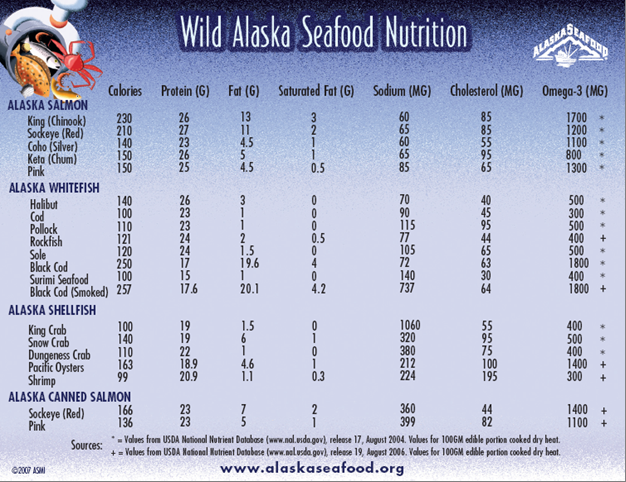


Let seafood catch your attention. Seafood provides excellent nutrition, taste, and health benefits that you might have been unaware of before.


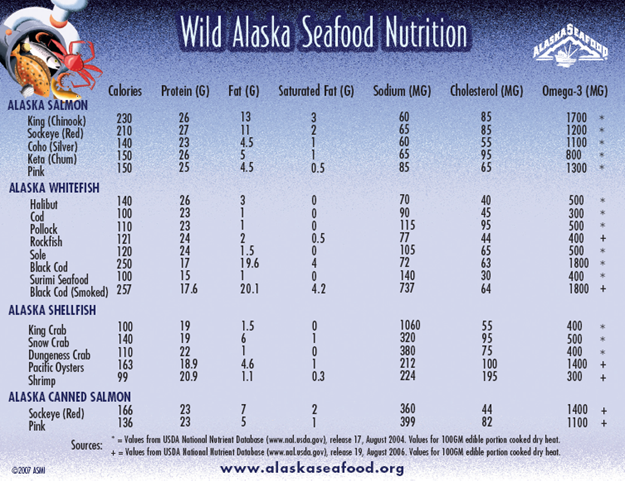
Seafood contains protein, vitamins A, D, B 12, iron, zinc, magnesium, selenium, and even glucose. One of the most valuable nutrients in seafood, are Omega-3 fatty acids. The benefits of Omega-3 are quite numerous, beginning with basic cell health, and they have been shown to boost immunity, stimulate brain function, help protect against heart disease, Alzheimer’s disease and other neurological disorders. Researchers are studying the connection between Omega-3 fatty acids and the alleviation of symptoms of depression, joint pain, hypertension, skin problems, and even attention deficit disorder.
 

Seafood allergies are common, but the medical community is working to discover or create a method or medication that would allow people who are allergic to be able to consume seafood safely, because the health benefits are so extreme. Until then however, if you are able to eat seafood, you should. An excellent resource for seafood recipes, is http://www.eatingwell.com/recipes/collections/healthy_seafood_recipes.html


Tagged with: