May 31, 2008

A Guide To Blood Pressure


bpress.jpg

Blood pressure is defined as the force that is pushed along the arteries every time the heart beats. Therefore, blood pressure is a measure of how hard the heart has to work to pump blood.

The pumping action is known as systolic pressure. When the heart is at rest, between beats and the blood pressure falls, is known as diastolic pressure. Blood pressure is measured using a blood pressure cuff and recorded as systolic pressure over diastolic pressure. The top number indicates the systolic pressure and the bottom indicates the diastolic pressure. Normal blood pressure is lower than 120/80. Blood pressure in children is much lower than in the adults since pressure rises as a person ages.

The systolic and diastolic reading of 140/90 or higher indicates high blood pressure. This can result in a faster heartbeat as the heart tries to pump the blood. This could lead to stroke, heart attack, and kidney problems.

Severe medical problems can cause blood pressure to rise. Arteries may become hardened and narrowed with cholesterol plaque and calcium, resulting in the heart having to pump harder.

Blood pressure is important to pay attention to as high blood pressure is linked to hypertension, which leads to heart attack.

Ask your doctor about your blood pressure.


Tagged with:

Is Public Access Defibrillation A Good Idea


 public-access-defibrillation.jpg

There are successful PAD, public access defibrillator, campaigns that are currently running in the US. Good examples of offering public access to defibrillators can be found in Indianapolis International Airport, Orlando International Airport, Colorado Springs Airport, Nashville International Airport, St. Louis International Airport/Lambert Field, Tampa International Airport and Tucson International Airport.

Only 10 months after the se programs were initiated, the survival rate of patients has risen to 75%. Even though the automated external defibrillators are very easy to use, it is necessary that people benefit of some basic AED training in order to avoid negligent use of this device and make the AEDs fully effective. The basic training must consist of at least 3 or 4 hours of training.

After having completed the AED course, one must be able to determine the state of a patient and whether the use of an AED is needed. The AED trainee should to be able to assess the state of the patient after the shock delivery. The trainees also have to know what precautions are needed in order to perform a safe defibrillation.

Presently, there are several automated external defibrillator training courses provided by the American Heart Association (AHA) or the Red Cross on request.


Tagged with:

May 29, 2008

Cholesterol Facts For Heart Health

food1.jpg

High cholesterol tends to cause the narrowing and hardening of the arteries, which in turn can lead to heart disease or stroke. What does blood cholesterol level depend on? Many people would say it depends on the kind of food we eat but this is not the whole truth when it comes to high cholesterol. High cholesterol can also be caused in part to how cholesterol is made in your liver.

There are two kinds of cholesterol - the good HDL cholesterol, and the bad LDL cholesterol. HDLs are transporters that carry excess cholesterol to the liver where it can be broken down. LDLs cause the build-up of cholesterol in the arteries leading to high blood pressure and risk of heart attack.

Vitamin C has been found to be a very effective treatment for high cholesterol. Pectin from fruit and vegetables seems to help in fighting high cholesterol by flushing out the excess from the system. Two or three carrots a day is said to be beneficial in lowering high cholesterol. Strawberries, apples, spinach, potatoes and tomatoes are also useful in the treatment of high cholesterol. Vitamin E prevents the oxidation of cholesterol and can therefore prevent hardening of the arteries.

Garlic, turmeric and cinnamon are also very beneficial natural treatments of high cholesterol. Ask your doctor which foods will work best for you.


Tagged with:

May 17, 2008

Heart Attack And Depression

dep.jpg

Recent studies have shown that as many as 65% of people who have a heart attack feel depressed. Women who have been depressed before and people who feel alone, without emotional support are at a higher risk for feeling depressed after a heart attack. Two new studies have shown that women are more likely to experience chronic depression after suffering a heart attack and lead lives of poorer quality following their treatments.

Being depressed can make it harder for a patient to recover. People that are quickly able to get back to their usual routines seem to experience less depression.

Can heart disease trigger depression or depression trigger heart disease?

Either of the above may be true, one thing seems clear. The two often go hand in hand, therefore controlling one may help control the other.

According to The American Academy of Family Physicians, research has shown that people who are depressed and have pre-existing cardiovascular disease have a 3.5 times greater risk of dying of a heart attack than patients with heart disease who are not depressed. As well, in a recent study, depression was shown to be associated with an increased risk of developing coronary heart disease in men and women. Depression was shown to increase mortality related to coronary heart disease in men but had no effect on mortality in women.

Ask your doctor about using lifestyle changes like avoiding alcohol, illegal drugs, smoking, starting a regular exercise program, eating a balanced diet, reducing stress and getting sufficient rest to fight heart disease and depression.


Tagged with:

April 23, 2008

What Is Cardiac MRI And Who Needs One

mri2.JPG

MRI is the acronym for Magnetic Resonance Imaging. MRI uses a powerful magnet, radio waves and a computer to get pictures of any body part, including the heart. Cardiac MRI does not expose the patient to any radiation.

Who needs a cardiac MRI?

Cardiac MRIs are used for evaluation of patients with very specific heart conditions, usually those with previously operated congenital heart disease.

A cardiac MRI takes very clear pictures of the heart and blood vessels in the chest. Cardiac MRI is also able to provide detailed measurements of certain heart parameters unavailable by other means.

A Cardiac MRI test is performed by a specially trained MRI technologist, MRI Radiologist, an MRI Physicist, and a MRI Cardiologist. The test will be read by both a MRI Cardiologist and MRI radiologist.

Most patients do not require sedation. Some patients have claustrophobia and for these patients a small dose of Valium usually helps them to tolerate the scan.

Patients also must be able to follow instructions carefully, particularly in holding their breath for several seconds on command.

The only implanted devices absolutely not allowed in the MRI scanner are pacemakers and defibrillators, since the powerful MRI magnet may disrupt these devices. The magnet does not disrupt function of other metal devices, such as implanted articial heart valves. But any removable metal should be removed.

Check with your doctor for more info on Cardiac MRI.


Tagged with:

April 17, 2008

Do You Know What Cardiopulmonary Bypass Is

bypass.jpg

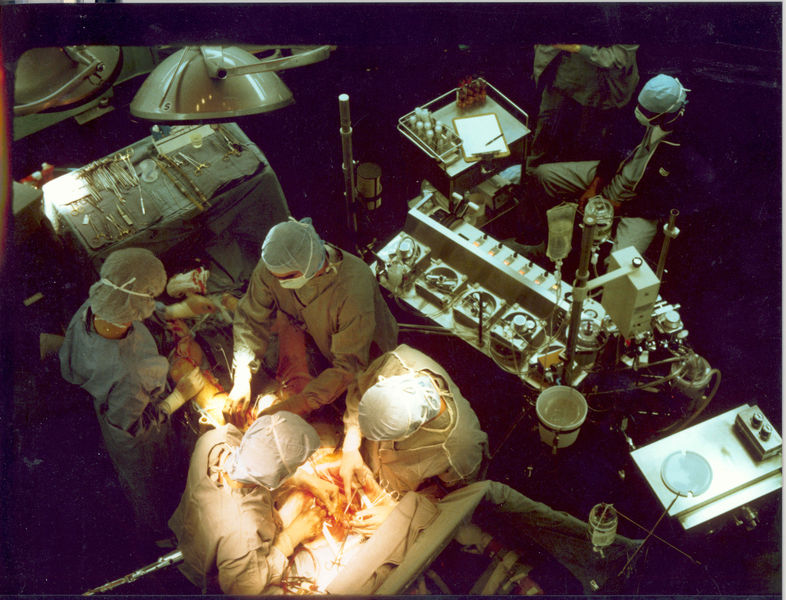
To fix most cardiac defects, the heart surgeon requires a bloodless, motionless field in which to work. To achieve this, the motion of the heart and lungs must be stopped.
For this to happen, there needs to be a means for blood to circulate through the body, delivering the necessary nutrients and oxygen to maintain life, while the heart and lungs are stopped. This is made possible through a process known as cardiopulmonary bypass (CPB).

Clear tubing (PVC) contains the patients’ blood as it is removed from the body. Large bore catheters (called cannula) are placed in the right side of the heart, allowing the desaturated blood from the body to enter the cardiopulmonary bypass unit. The PVC tubing runs through a mechanical pump that can be regulated to the proper cardiac output for a particular patient.

For example, a 5-year-old child has a much smaller cardiac output than an adult does; so the pump must run at a higher rate for an adult patient than a child. More tubing sends blood from the mechanical pump to a gas exchange device called an oxygenator, or artificial lung.

The oxygenator performs the same job as the lungs: oxygenation of the blood as well as removal of carbon dioxide. This re-oxygenated blood is then put back into the body through other tubing placed in the aorta.

Cardiopulmonary bypass permits the patients’ blood to bypass the heart and lungs, giving the desired bloodless, motionless operative environment while still supplying all the other organs of the body with a constant supply of oxygen and nutrient-rich blood.


Tagged with:

Information About Cardiac Catheterization

cardiac-catheterization.jpg

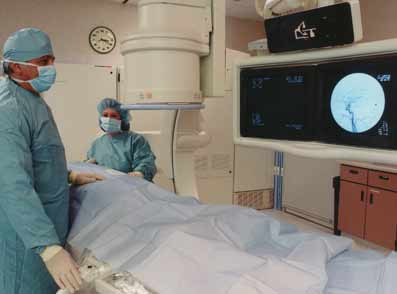
Cardiac catheterization is a procedure that punctures an artery or vein, usually located in the groin area, so that a small, long, flexible tube can be guided into the heart and major vessels around the heart.

The cardiac catheter is moved through the heart with the aid of an x-ray machine. This is usually done for diagnosing heart problems.

Interventional cardiac catheterization is a type of procedure where actual treatments can be performed by use of specialized catheters. These specialized catheters include balloon catheters that can open up narrowed valves or arteries and also catheters where devices can be deployed which can close extra vessels or certain “holes” in the heart.

Some intervention procedures are considered the first choice in treatment and are preferred over surgery. Some interventions are considered as a short-term solution until more definitive surgical procedures can be performed more safely. The types of cardiac catheterization performed are different for each patient. It is usually used where there are narrowed valves or arteries causing obstruction of blood flow.

Before the procedure the patient will need certain tests including a chest X-ray, an electrocardiogram (EKG), and some blood tests. The patient will be given some medication to make him sleepy before the procedure.After the catheterization, the patient will be taken to a recovery room where you will be observed for a couple of hours.

Depending on the type of intervention performed and how well the patient recovers, a longer period of observation or overnight admission to the cardiac unit may be required.

Ask your doctor for a more detailed explanation of this procedure.


Tagged with:

March 27, 2008

Use Green Tea To Help Prevent Atherosclerosis

tea1.jpg

Heart disease and atherosclerosis are a great health concern but if one adds Green Tea they can lessen the worry.

Green tea is one of the most under-recognized ways to better ones health. Green tea is rich in anti-oxidants, just like fruits and vegetables. There have been many studies that have concluded that green tea’s anti-oxidants have a powerful influence in preventing heart disease and atherosclerosis.
The University of Shizuoka in Japan conducted a study on green tea and its ability to prevent atherosclerosis. Mice were fed green tea extract in their drinking water, while other mice were fed water without green tea added. All of the mice were given foods high in saturated fats.

After about eight weeks, the mice that were fed green tea showed significantly less propensity to have atherosclerosis. While a high level of LDL was still present, it was not being converted to plaque. The study concluded that green tea has the ability, likely because of its high anti-oxidant level, to prevent the peroxidation of the LDLs. So, even when the diet was high in bad cholesterol, the green tea seemed to prevent this cholesterol in the blood from turning into atherosclerosis.

This doesn’t mean that it’s ok to eat a diet high in fat and cholesterol and rely on green tea to take care of the problem.

The best plan for preventing heart disease and atherosclerosis is to follow a low cholesterol diet, maintain a healthy weight and get regular exercise.


Tagged with:

March 22, 2008

Eating Right To Lower Cholesterol And Have A Healthy Heart

 fish.jpg

If you have recently been told that you have high cholesterol levels and that you need to change your eating habits, you may be looking for great recipes to do so.

As the internet has taken away many boundaries you will be able to find recipes to help lower your cholesterol and improve your heart health. Below is just one example.

Herb-Crusted Halibut with Toasted Almonds
Ingredients
PAM for Grilling Spray
1/4 cup fresh parsley
2 tablespoons fresh thyme leaves
1 tablespoon coarse ground black pepper
3 cloves garlic
1 teaspoon freshly grated lemon peel
3 tablespoons fresh lemon juice (juice of 1 lemon = about 3 tbsp)
1/4 cup sliced almonds, toasted
1-3/4 pounds halibut filets with skin (6 to 8 oz each)

Directions

1. Spray grate of outdoor grill and utensils with PAM for Grilling Spray. Preheat grill to medium heat.
2. Combine parsley, thyme, pepper, garlic, lemon peel and lemon juice in small food processor. Pulse until parsley is finely chopped. Spread seasoning onto the top of each fillet. Spray each with cooking spray for additional browning. Grill halibut, skin side down, 10 minutes or until fish flakes easily with fork. Turn fish over the last 2 minutes of grilling.
3. Transfer halibut to serving plates. Sprinkle with almonds; squeeze additional lemon over each fillet, if desired.


Tagged with:

The Basics Of Cholesterol And Your Heart

allamericanburger.JPG

High cholesterol is a hot topic these days. Cholesterol is a lipid which is naturally produced by the body to maintain cell membranes. The body actually makes all the cholesterol it needs for its functions. Our cholesterol level becomes high when either our bodies overproduce cholesterol or we eat foods high in cholesterol.

Having high cholesterol is dangerous because it can build up in your arteries, causing heart disease and heart attack. High cholesterol is also responsible for strokes.

Your doctor can perform a blood test to determine what the level of cholesterol is in your blood. Sometimes your doctor may want you to take a fasting blood test, which means he will test the cholesterol level in your blood after you have gone without eating for a specified number of hours.

A high cholesterol level is medically defined as more than 240 mg/DL total. Your doctor may also divide your cholesterol level into “good” cholesterol or HDL cholesterol and “bad” cholesterol or LDL cholesterol.

If your physician feels that your cholesterol level is high, there are several things that can be done. These things include eating a healthy low-fat diet and exercising regularly to improve heart and overall health. Your doctor may put you on cholesterol lowering prescription medication.

Your cholesterol level has a very important impact on your total body health and your heart. It can even be life threatening if not controlled. See your doctor for a cholesterol test. If your cholesterol level is not within normal ranges, take action to lower it.


Tagged with: